

Cancer Prevention
Physical Activity
Physical inactivity is a major contributor to cancer risk in the UK. It is associated with several common cancers including breast, bowel, and endometrial cancer. Many adults do not achieve recommended levels of physical activity, increasing their risk of cancer alongside other long term conditions.
Primary care plays a key role in identifying low activity levels and supporting patients to make realistic, manageable changes that can reduce cancer risk. Physical activity has been shown to improve cancer outcomes for patients, including enhancing quality of life, reducing treatment-related side effects, and supporting recovery and long-term survival.
Physical activity guidelines for adults aged 19 to 64 – NHS
Watch the video below to find out more about what you can do in primary care to support patients to be more physically active.
This video is part of this year’s Prevention & Early Diagnosis Local Improvement Scheme. To support your PCN to achieve one of its requirements please watch the video and complete this short survey
National Clinician-Facing
National Patient-Facing
Information for Patients
- Active Dorset Public-Facing Website – Movement for Movement
- Activity Finder
- Movement stories – 5K Your Way
Information for Clinicians
- Supporting people with long-term health conditions to move more
- Active Dorset – Professionals Training Hub
- Physical Activity Clinical Champions – Open Sessions
Lifestyle / Behaviour Change Support (for both patients and clinicians)
All
- Signposting physical activity – Energise Me – Physical activity
- Get Active Hampshire
- Get Active Isle of Wight
Southampton
Eastleigh
Fareham
Gosport
Portsmouth
Havant
East Hampshire
- Exercise referral schemes | East Hampshire District Council
- Physical Activity | Gu&g East Hants | England
Hart
Rushmoor
Basingstoke and Deane
- www.basingstokeleisure.com/basingstoke-aquadrome/facilities/health-and-wellbeing/
- Current wellbeing initiatives
Test Valley
New Forest
Winchester
IOW
Alcohol
Alcohol is the most popular drug in the UK, and the leading cause of illness and mortality for those of working age. About 4,800 cancer deaths could be attributed to alcohol each year. Around 24% of people in the UK drink at increased risk levels and it is deeply embedded into the UK’s history and culture. This can mean that risk and harm are tolerated and overlooked.
Watch the video below to hear from Dr Richard Roope (Wessex Cancer Alliance Primary Care Lead) to find out more about what you can do in primary care to support your patients drinking at increased risk levels.
IBA is a practice used to help identify an individual’s alcohol consumption risk level and then provide brief advice to those in the medium to high-risk categories.
Once the risk level is identified using a screening tool, a practitioner can understand when to engage in brief advice or refer someone to a specialist service.
You can assess a person’s risk by completing a short screening tool called AUDIT-C. If the patient has a score of 5 or more and time permits, you can complete the remaining alcohol harm questions to obtain a full AUDIT score.
ASK: Be aware of opportunities for change and raise the issue.
EXPLORE: Use open discovery questions and a non-judgemental attitude. Try to avoid telling people what to do. Use AUDIT C to support identification of risk alongside supporting information to help structure your conversation.
ACT: On the persons response, discuss helpful tips for cutting down OR refer/signpost to local services.
This handy crib sheet has been developed by Hampshire County Council to help support you in having these conversations.
HPV Vaccination
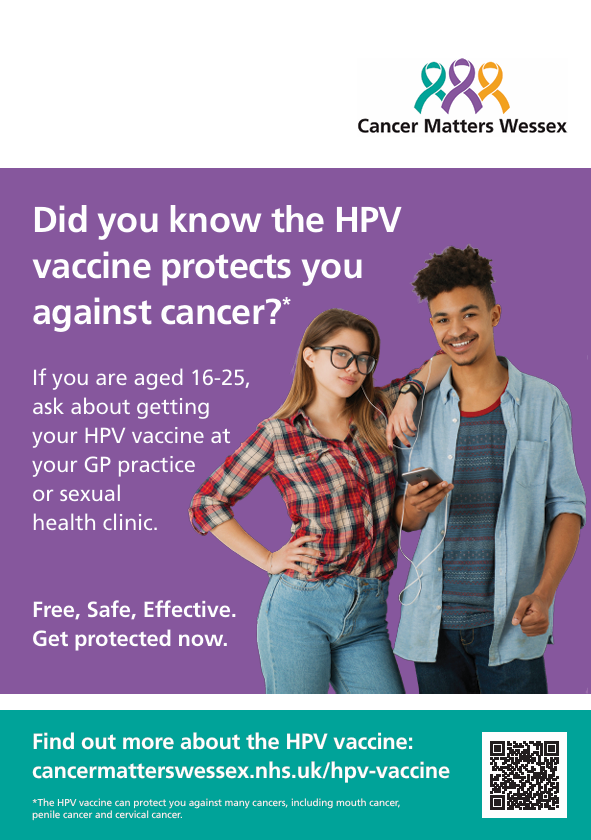
The HPV vaccination helps to prevent cancer by protecting against HPV, the virus that causes almost all cases of cervical cancer and some other cancers.
For more information, resources and useful links visit our HPV Vaccination page
Smoking
Smoking is the single most avoidable risk factor for cancer.
Further information
- Cancer Research UK e-cigarette hub – Information for health professionals including evidence, patient information and FAQs
- South East England position statement on e-cigarettes 2021 – Summary of the latest evidence and best practice guidance
Training and education
- 30 seconds to save a life – Very Brief Advice (VBA) training for smoking cessation. VBA is an evidenced based form of simple advice designed to be used opportunistically in less than 30 seconds.
- Behaviour change and cancer prevention – 30-minute RCGP module for healthcare professionals who would like to promote behaviour change around smoking, obesity and alcohol consumption.
- VBA for smoking cessation podcast – This short (15 minutes) and downloadable podcast for healthcare professionals highlights the importance of smoking cessation for patients and how to use ‘Very Brief Advice’ (VBA) in a consultation.

Obesity
Keeping a healthy weight reduces the risk of 13 different types of cancer and yet many people are not aware of the link.
Further information
- Obesity and cancer – The latest research on obesity and cancer
- Let’s talk about weight – Tips and practical advice on how to discuss weight loss with patients.
- Moving Medicine – Evidence, tools and training to help you integrate physical activity conversations into routine care
Training and education
- The health benefits of physical activity: cancer – 30-minute BMJ Learning online course on the effectiveness of physical activity as a preventer of cancer and an essential part of its treatment.
- Understanding physical activity and cancer – Macmillan e-learning course to help you raise awareness of the importance of physical activity.
- Moving Healthcare Professionals – Physical activity champion training for practices and support resources to promote physical activity
- Dorset – Active Dorset offers free training to healthcare professionals to support people to move more.
- Hampshire – Physical activity clinical champions training – Free sessions on integrating physical activity advice into everyday clinical practice provided by Energise Me.


Information for patients
- Keeping Well page on Cancer Matters Wessex
- Information on the causes of cancer and reducing risk
- NHS Better Health – Free tools and support to help people lose weight, get active or stop smoking. Includes links to a range of apps including Quit Smoking, Couch to 5k and Drink Free Days plus a search function for local support services.
- Our Dorset Video Library have a range of case study videos to inspire people to get moving.

Useful resources
The following Cancer Research UK resources can be displayed in GP surgeries.
Staff Health and Wellbeing
Your health and wellbeing is important too – here are some additional resources you might find useful:
- NHS England – Supporting our NHS people – Details of the support available from the National Health and Wellbeing Programme including the Digital Weight Management Programme
- NHS Professionals Health and Wellbeing Hub – Resources, ideas, and guidance to help you manage your mental and physical health and wellbeing including information on how to access your free Whealthy Plan
- Here For Each Other by Our Dorset – Information and guidance on health and wellbeing including tips to eat well and free fitness videos and apps, as well as access to bespoke 1:1 support, for NHS and care sector workers in Dorset
- LiveWell Dorset – Information and guidance on weight management, becoming more physically active, stopping smoking and drinking less, and access to free health coaching, for residents in Dorset.
- Hampshire and Isle of Wight – People Portal – Information and guidance on healthy lifestyles and access to confidential health and wellbeing support for people working in the NHS and Primary Care services across Hampshire and Isle of Wight
Physical Activity
- Tips and practical advice on how to be more active at work – Active Dorset and Energise Me – Hampshire and Isle of Wight
- Health Service Discounts and Blue Light Card – Exclusive discounts for NHS and Healthcare workers including gym memberships
Initiatives that practices can sign up to encourage staff to increase their physical activity:
