

Research delivery teams play a vital role in advancing healthcare by helping to develop, deliver and evaluate new treatments and technologies. Working closely with patients, clinicians and multidisciplinary teams, they ensure that research is embedded into everyday clinical practice, helping to improve outcomes and shape the future of cancer care.
With the NHS facing growing financial and clinical challenges, we are also exploring ways to support and improve the transition from research trials into the NHS pathways as soon as we can through our jointly funded cancer innovation programme.
Clinical Trials
Clinical trials are a form of medical research that studies new tests and treatments involving people and evaluates their effects on human health outcomes. They are pivotal to understanding more about cancer and how we treat it.
There are numerous Clinical trials for cancer, taking place both in Wessex and across the country.
Further information can be found on the following websites:
Cancer Research UK provides a list of clinical trials and this website has been developed for patients who may wish to search for trials themselves. Find a Clinical Trial – CRUK.
Follow the link for latest updates and News in Cancer Research
Southampton Clinical Trials Unit have numerous cancer-specific trials that are currently active. Visit their website here
Research Delivery Teams
Research radiographers combine clinical expertise with research delivery by embedding clinical trials within their departments, promoting a research-active culture and working closely with multidisciplinary teams. This unique position allows them to maintain their clinical skills while contributing to innovations that will shape the future of cancer treatment and improve patient outcomes.
Research roles like these demonstrate how healthcare professionals can combine direct patient care with the opportunity to drive innovation, making a lasting impact on both current and future generations of patients.
Research Nursing
The role of Research Nursing in cancer takes many forms. A Research Nurse is responsible for running clinical trials that develop new drugs, treatments or care pathways. They contribute to the development of new evidence and improve patient care. They work with patients who have consented to take part in different trials to help to improve treatment and survival rates for cancer patients.
Research Nurses will also have administrative time to ensure the trials run smoothly and that all protocols are followed.
Insight from our Research Nurses
The blogs below have been written by research nurse Temi Olanrewaju and give an insight into the role and her experiences.
Working in cancer research has shown me that the barriers to trial participation are not always clinical. More often, they are practical and personal.
One of the most common challenges is the burden of multiple hospital visits. On our early phase one haematology trials, eligible patients were attending over two separate days to complete a single treatment visit attending on one day for consultant review and blood tests, then returning on another day for treatment. For patients travelling long distances or balancing work, family and other responsibilities, this added to the demands of taking part in research.
Patient feedback highlighted the impact that the two-day pathway had on everyday life. Patients described repeated long-distance travel, early morning journeys on two separate days, family members taking time off work to bring them to hospital, and making arrangements for responsibilities at home, including caring for pets and farms. Although a two-day visit does not prevent patients from participating in research, it can make participation more challenging for some.
In our setting, redesigning the pathway so that eligible patients could complete their visit in a single day helped reduce this burden. The feedback was encouraging. Every patient who moved onto the single-day pathway and completed the evaluation preferred the new approach, and none wanted to return to the previous pathway. One patient shared how the change meant their son no longer needed to take extra day off work to accompany them to hospital.
Communication is equally important. The consent process can feel overwhelming and taking time to explain a study clearly and simply helps patients make informed decisions with confidence. Some patients also do not initially see research as something relevant to them, highlighting the importance of how research opportunities are introduced and discussed.
These experiences have reinforced that improving trial participation is not always about large-scale change, but about recognising and addressing the everyday barriers within our control. As research nurses, we are well placed to identify those barriers, work collaboratively to reduce them, and contribute to more accessible, patient-centred research delivery.
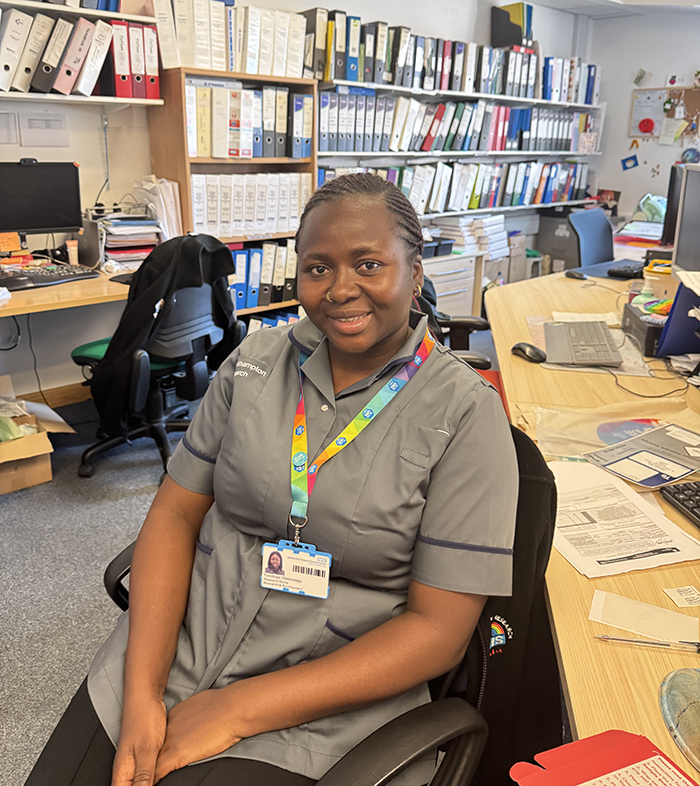
Clinical trials are most valuable when they reflect the populations they are designed to serve. Yet some groups remain consistently underrepresented in research, not always because of clinical ineligibility, but because of practical, cultural and systemic barriers.
As research nurses, we sit at one of the most important intersections in the research process: between the protocol and the patient. That position gives us a unique opportunity to influence not just how trials are delivered, but who gets the chance to take part.
In practice, advocating for inclusion can look like many things. It may be flagging when eligibility criteria feel unnecessarily restrictive. It may be taking extra time during the consent process with a patient who needs information explained differently. It may be noticing patterns which patients are being screened out, and why and raising those observations with the wider team.
Small adjustments in how we communicate, how we schedule, and how we introduce research opportunities can meaningfully influence who feels welcome in a trial. Patients who have never been asked to take part in research, or who do not see it as something relevant to them, often respond to how research is presented as much as to what is being offered.
Inclusive research delivery is not a separate workstream. It is embedded in the quality of care we provide every day. Research nurses are well placed to lead this, not through policy alone, but through everyday practice, observation and advocacy. By recognising and addressing barriers within our control, we can help make research more accessible, more inclusive and more representative of the communities we serve.
Current Research Projects in Wessex
For the cancer workforce
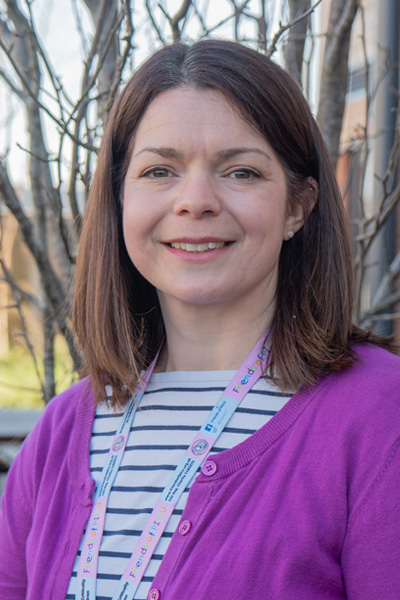
Donna Austin is a paediatric nurse by background and has spent most of her clinical career in Paediatric Intensive Care where she developed an interest in how research and the utilisation of evidence-based practice can improve patient care. During her Advanced Clinical Practitioner (ACP) training she furthered this thirst for research and she now works to build the capability and capacity in all ACP’s working at UHS; supporting the integration of research for practitioners into their advanced practice roles.
She has successfully received a Senior Research Leader Award from the National Institute of Health Research (NIHR) and is using this to implement the Advanced Practitioner Research Toolkit, providing ideas and opportunities to explore where to take the research pillar of practice.
“It is challenging as an ACP, to find time for research when we are programmed to prioritise clinical practice and our patients, before finding time for the research element. ACPs are the trailblazers of our time and at the forefront of their practice, so I am really keen to offer some support and guidance on how and where research could play a role in your work and improve the care of your patients”
“The toolkit has been adapted to include opportunities specific to UHS and can be further aligned to your role; it helps to address what it is you are doing and what you need in order to complete your research and embed that research into your work”.
Donna is currently piloting the Advanced Practice Research Toolkit in Southampton Children’s Hospital and is now seeking opportunities to provide the same experience with the Toolkit to all ACPs across the Trust. If you are an ACP with a cancer role, please contact Donna to talk about this opportunity.
For your patients
Please consider sharing these opportunities with your teams to share with their patients
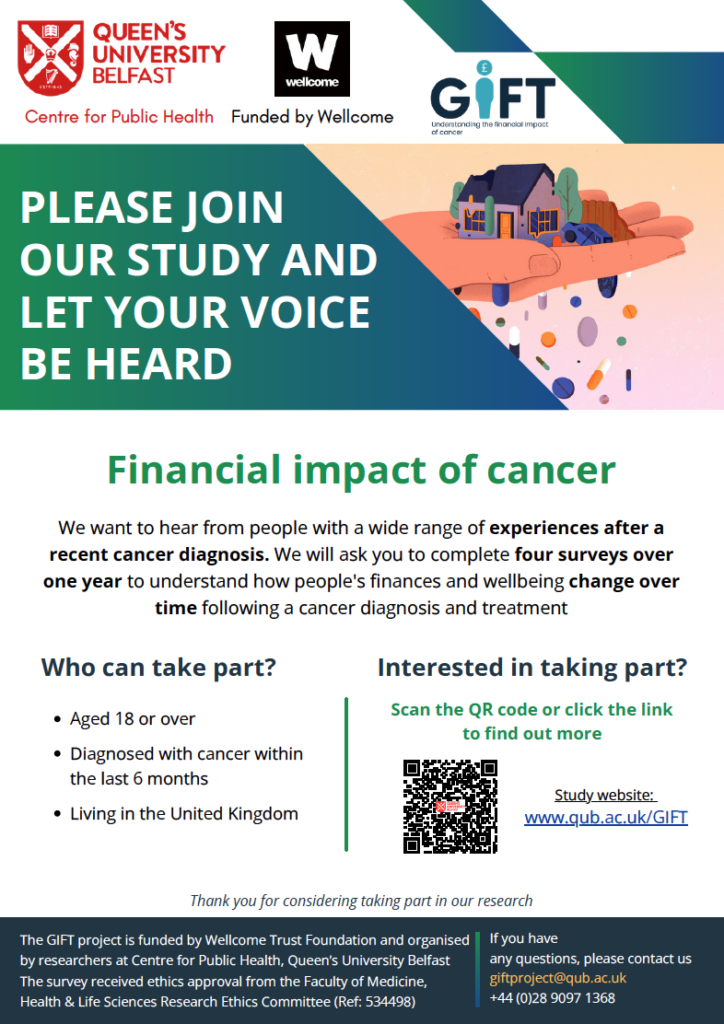
The GIFT Cohort study is now open for recruitment. This study involves a series of online surveys conducted over a 12-month period to examine the financial impact of a new diagnosis of cancer
The GIFT project is a five-year UK-wide research study, funded by Wellcome Trust, exploring the financial impact of cancer on people living with and beyond cancer. The project examines how cancer-related financial strain affects wellbeing, quality of life, and everyday living experiences across the UK. Ethical approval has been granted by Queen’s University Belfast. Read more here.
As part of an Alliance funded study, Southampton University have developed a screening tool to help identify the support needs of people affected by cancer. They are looking for people who have had cancer to test that the questions in this tool are working well.
Please share the following link with any patients who may be interested in taking part: southampton.qualtrics.com/jfe/form/SV_9RiNLODJVmhthWK
Secure Data Environment (SDE)
Secure Data Environments (SDE) are data storage and access platforms, which uphold the highest standards of privacy and security of NHS health and social care data when used for research and analysis. Here in Wessex, we have an SDE hosted at University Hospitals Southampton. The Wessex SDE supports major national studies in areas such as dementia, cancer, emergency care, and bowel disease — helping to improve diagnosis, treatment, and outcomes for the public. By combining high-quality data with clinical expertise and public involvement, we accelerate health innovation for real-world impact and deliver research that makes a difference for patients and the NHS. Find out more about the Wessex SDE here.
Innovation
Since 2020, we have jointly funded a cancer innovation programme with Health Innovation Wessex to support the spread and adoption of innovations to support delivery of cancer pathways across Wessex.
They are one of 15 health innovation network teams in England. They are the health innovation experts, who work with innovators to develop healthcare solutions that are ready for use in the NHS and support health and social care teams to test and scale new technologies that tackle the NHS’s most pressing challenges.
The partnership gives us an accelerated ability to help local teams identify and adopt new solutions into their cancer pathways which will ultimately lead to improving how we diagnose, treat and support people with cancer. Our cancer innovation programme aims to do this by employing a programme manager who works with and supports local teams to do this. This builds on our existing national reputation for leading innovation adoption, to position Wessex as the most accessible system with which to develop and embed innovations in cancer care.
The programme is currently focussing on supporting teams across Wessex to identify innovations that support the workforce and streamline pathways so that cancers are found earlier, faster and patients have equal access to suitable treatment and support.
Useful Links:
Visit Wessex Cancer Academy for training and development opportunities in Research and Innovation.
Considering a Career in Research Nursing? Check out our cancer careers page for more information.
Find out more about other Cancer Nursing roles here.