In February 2024 WCA delivered their first supportive workforce conference. Cancer Care Coordinators, Cancer Support Workers, Pathway Navigators and MDT Coordinators came together to learn more about each other’s roles and the combined impact they have on the patient journey. Project Manager Mary Edwards talks about why it was important to hold this conference:
Conference Aims
The conference intended to achieve the following:
To understand the breadth of roles in the supportive workforce,
To network and identify ways to work together,
To examine how different roles impact on the patient journey,
To hear the patient voice and consider experiences of care,
To share best practice,
To identify different ways of working,
To access a choice of CPD sessions
Supportive Workforce Roles
For this first conference, the focus was on four supportive roles who work with patients with a suspected or confirmed cancer on a daily basis. Ambassadors for each presented about their role:
Cancer Care Coordinator
Cancer Support Worker
Pathway Navigator
MDT Coordinator
Patient Perspective
Two patients with a lived experience of cancer were able to join us and openly shared their experiences to help conference attendees consider their impact at different stages of a patient’s journey.
I loved spending the day with like-minded people and got an insight to how personalised care information could be shared between primary and secondary care in the future”
I do feel there is more scope for how we can join together going forward as a workforce”
How supportive roles enhance the patient journey
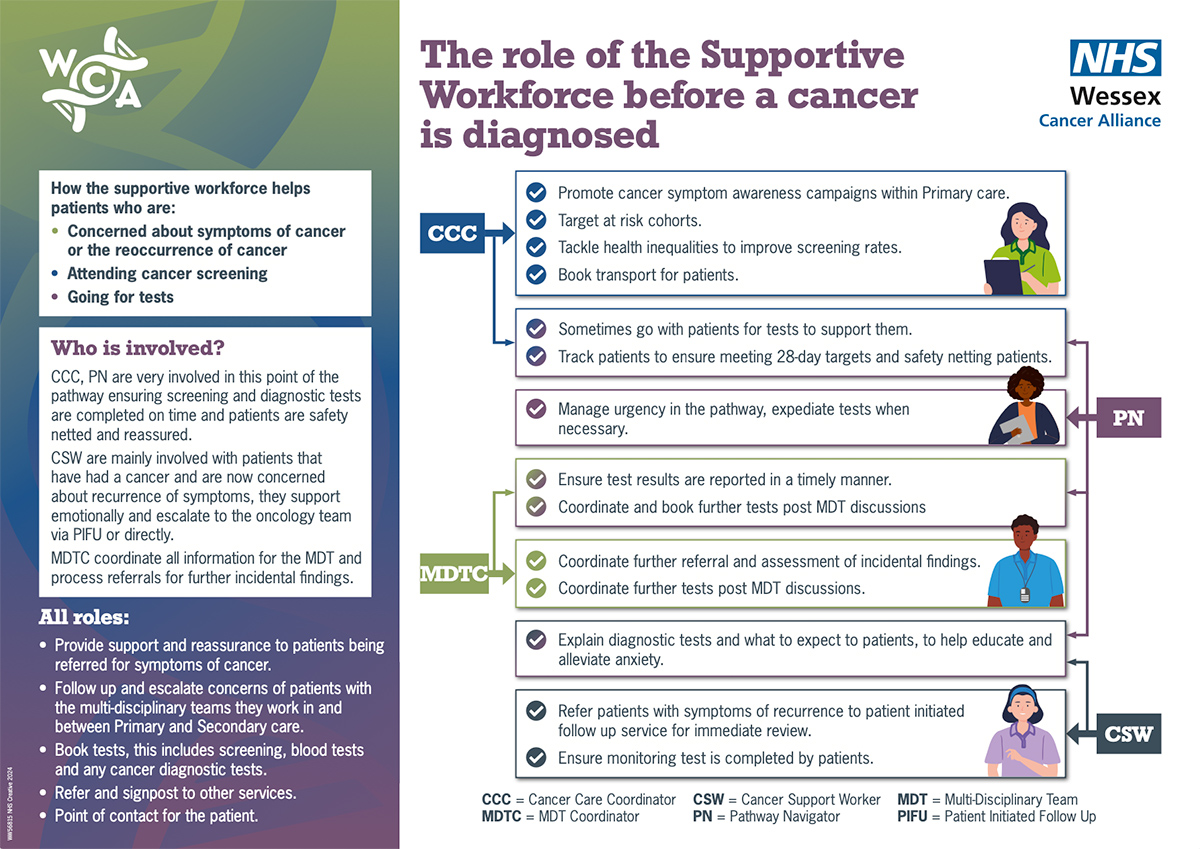
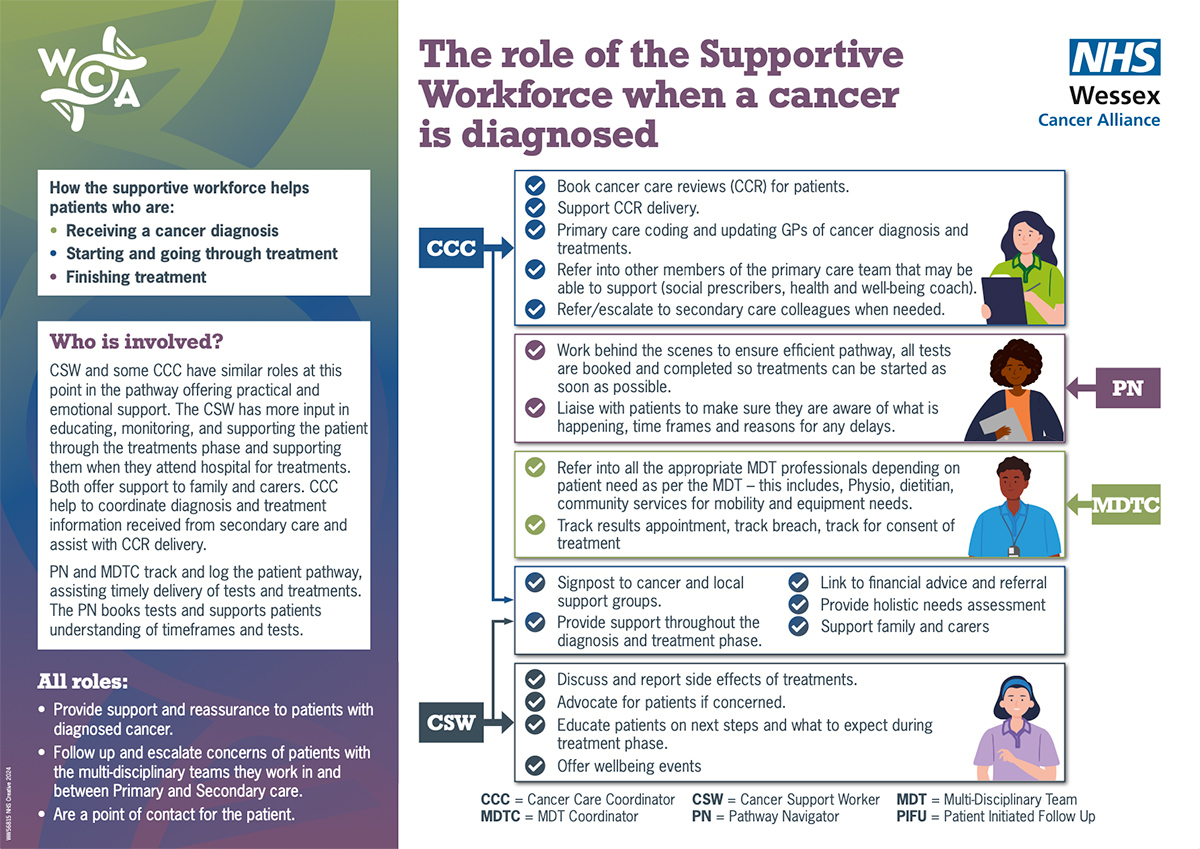
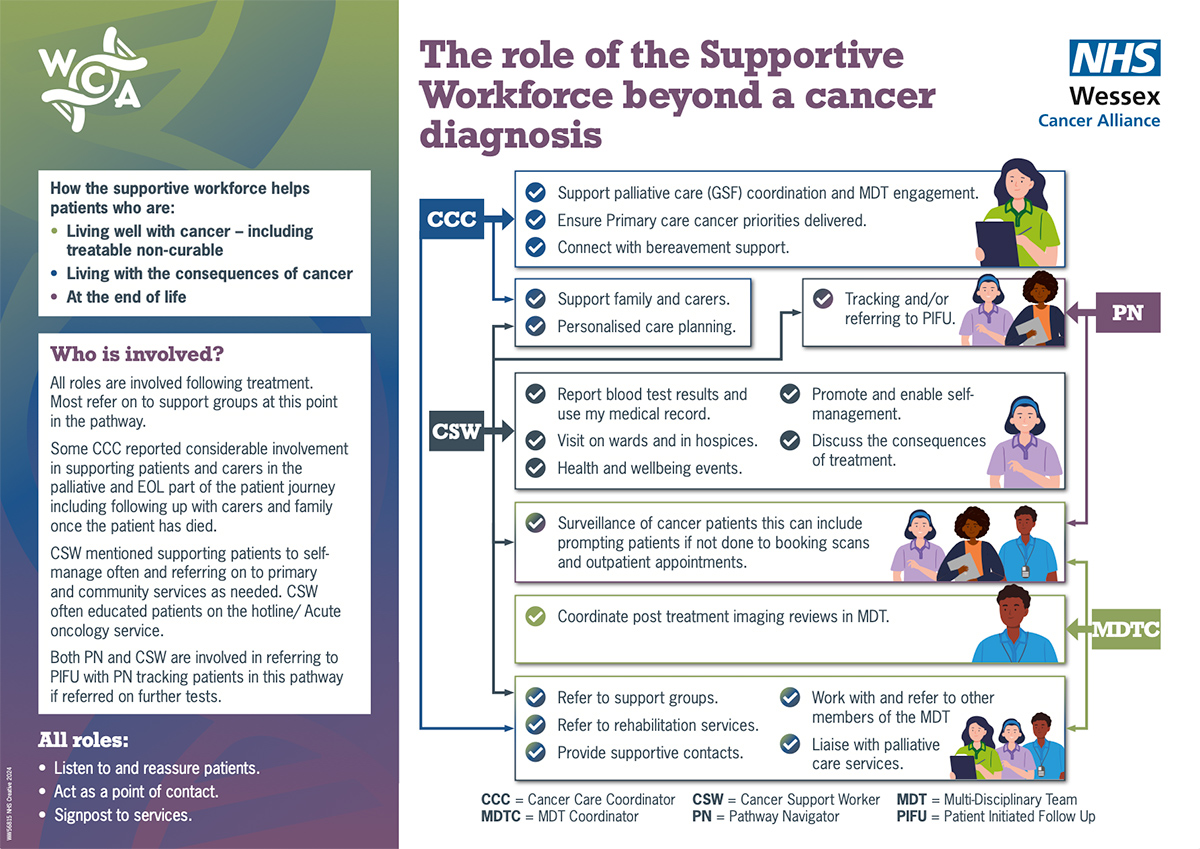
Conference participants wrote down what duties they undertake at three difference stages that may make up a patient’s journey:
1
Before a cancer is diagnosed; when a patient may be concerned about symptoms, are attending screening tests or other tests to determine if a cancer is present.
2
Once a cancer is diagnosed; when a patient receives a cancer diagnosis, starts their treatment and comes to the end of active treatment.
3
Living well with and beyond cancer; helping patients to live well with their cancer, to consider the consequences of cancer and its treatments as well as providing end of life care.
Working better together
Role Profiles
Participants were grouped by their geographical work locations and asked to share information about themselves and their roles. Role profiles including name, job title, place of work, contact details and a short bio about their role were collated and shared with the group. WCA will continue to add to this document so that all of the Wessex supportive workforce is included. If you would like to add your details or to receive the list please email: wessexcanceralliance@wca.uhs.nhs.uk
Hearing about the variety of roles and how they can be best utilised to enable improved communications between us all and thereby empower the patient”
The talk that the patients provided was amazing, and I was very thankful to be allowed to hear their experiences”
ACCEND
Project Manager Jo Tibbles introduced the Aspirant Cancer Career and Education Development Programme (ACCEND) and demonstrated ways to use the framework to develop your skills and competence as a supportive cancer professional:
The conference was fantastic. So well organised. Excellent speakers. Really made people feel valued and that they are well equipped to provide the very best of care to patients”
Brilliant hands-on training. Love the interactive culture of all your trainings offered. Thank you!”
Workshops
Conference participants had the option to attend 2 out of 3 workshops covering an introduction to frailty, resilience and understanding people’s diverse needs. The workshops were well attended and feedback was positive:
The workshops were brilliant”
The frailty and cancer workshop was very thought provoking”
The Resilience and Diverse Needs workshops were particularly informative”