
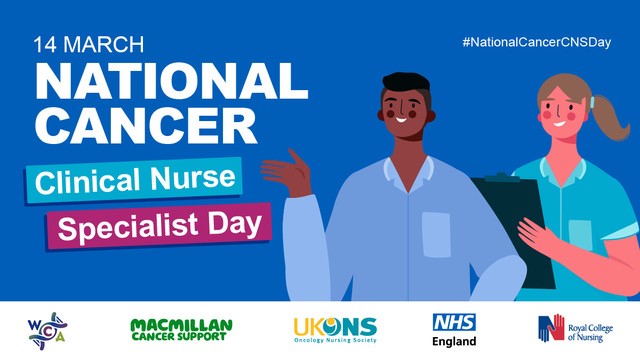
March 14, 2025 is National Cancer Clinical Nurse Specialist Day.
Now in its’ fourth year, Cancer CNS Day is a social media awareness day that has been developed to highlight and celebrate the hugely important role that the cancer nursing workforce provides in support of patients and UK-wide health systems on a daily basis. With the demand for cancer services increasing, more CNSs are needed now, more than ever before.
Holding events like National Cancer CNS Day on 14th March is an important marker to celebrate the incredible work they do and myth-bust preconceptions around working in cancer. #NationalCancerCNSDay
Every day Clinical Nurse Specialists see how cancer is impacting all areas of people’s lives. Their relationships, jobs, finances and more, and how this can be even worse for some, simply because of who they are or where they live. The only way we can change this is by working together as a cancer community – which includes people living with cancer, professionals, community partners, and other experts.
Please show your support for the Cancer CNS workforce and join the social media campaign. Share our posts and videos and help us shine a light on this great role!
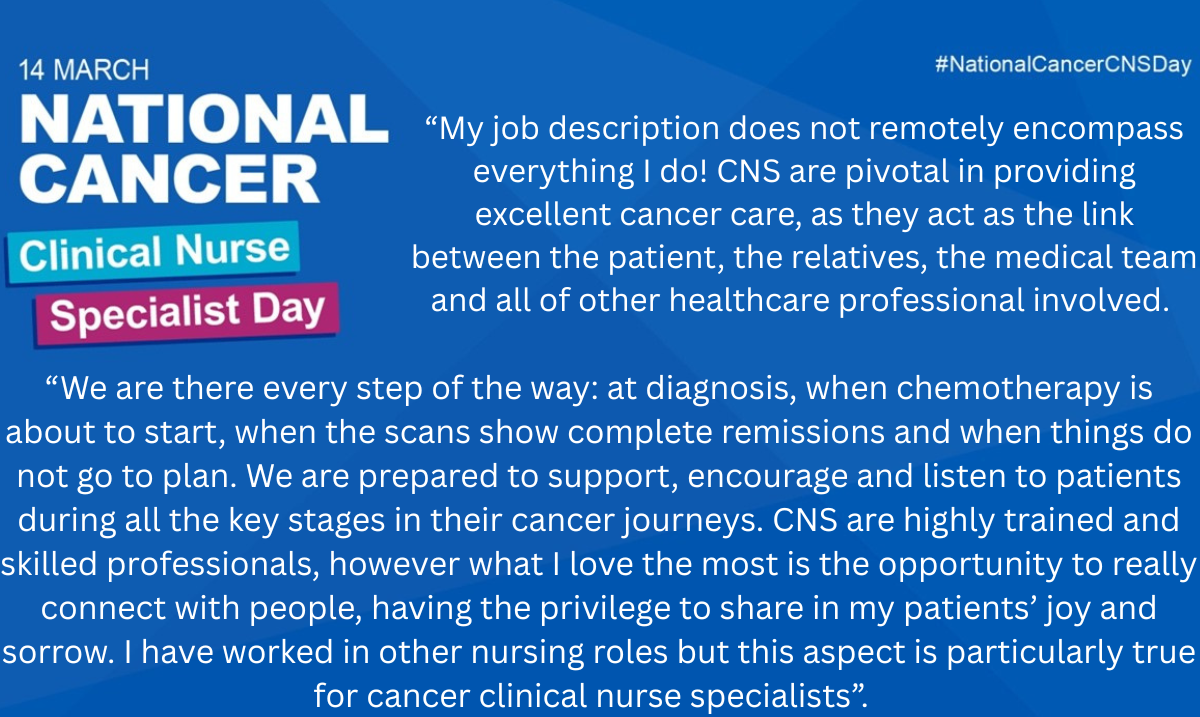
Click image to enlarge

What is National Cancer CNS Day?
The idea for a national cancer CNS day was born out of the knowledge that the growth of the cancer workforce is not keeping pace with the increasing demand for cancer services.
The National Cancer Workforce Plan (2017) and NHS England’s People Plan (2020) both pledged to increase and transform the cancer workforce to support the delivery of 21st century care. Raising awareness at this time is vital to promote action.
We know the Cancer CNS workforce is aging with 18% of the workforce who are older than the average age of general nursing personnel. Furthermore, since 30% of CNSs are looking to retire in the next 8 years, campaigns such as the National Cancer CNS Day are both important and urgent.
The Aspiring Cancer Career Education Development programme (ACCEND) was established to address and provide solutions to key issues that challenge the cancer workforce both now and into the future.
What is a Cancer Clinical Nurse Specialist (CNS)?
Visit our dedicated webpage, describing the role of the cancer nursing workforce.
Lead Cancer Nurse Sara, shares some insight into her role and the importance of a CNS
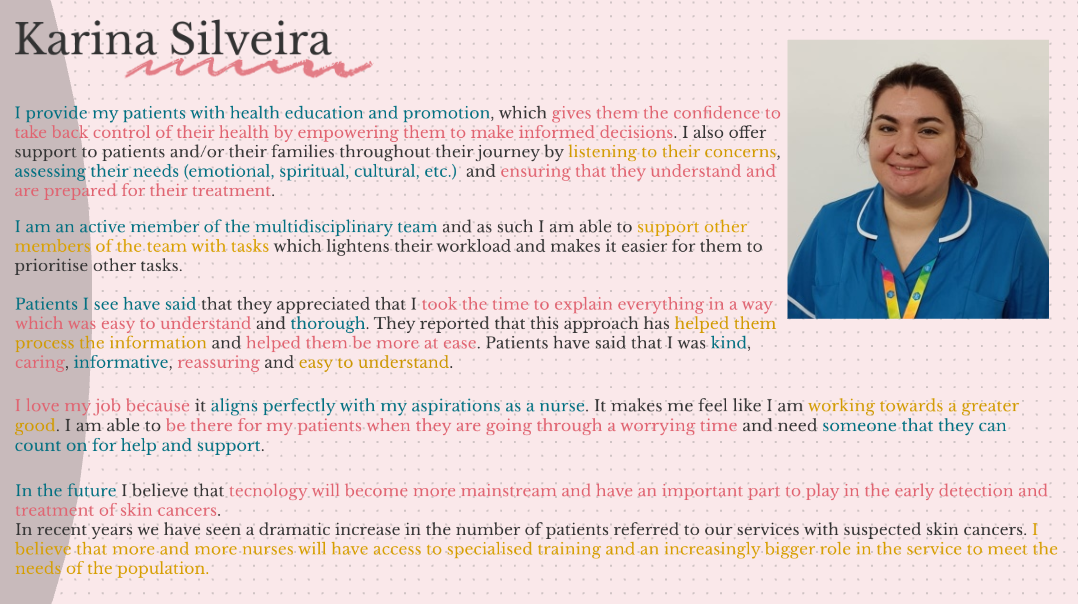
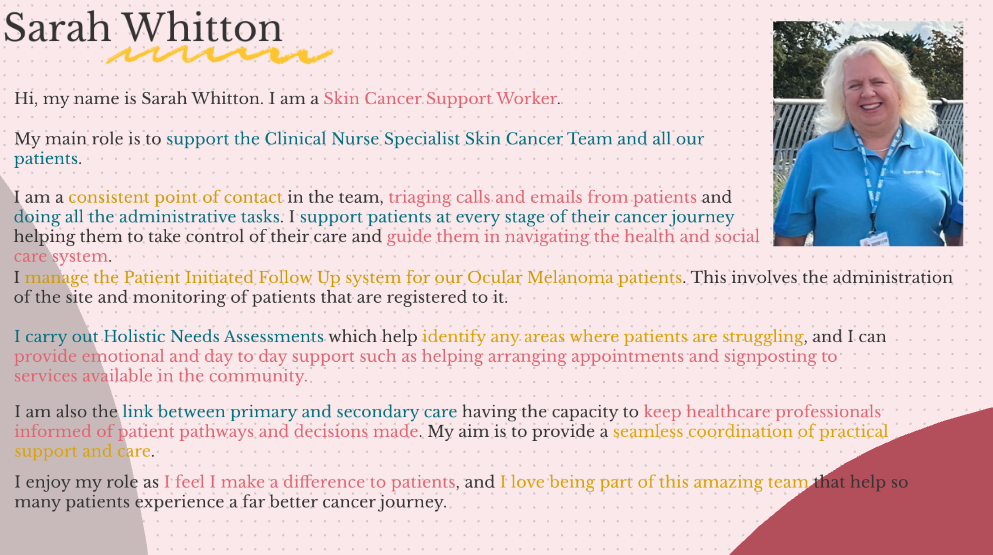
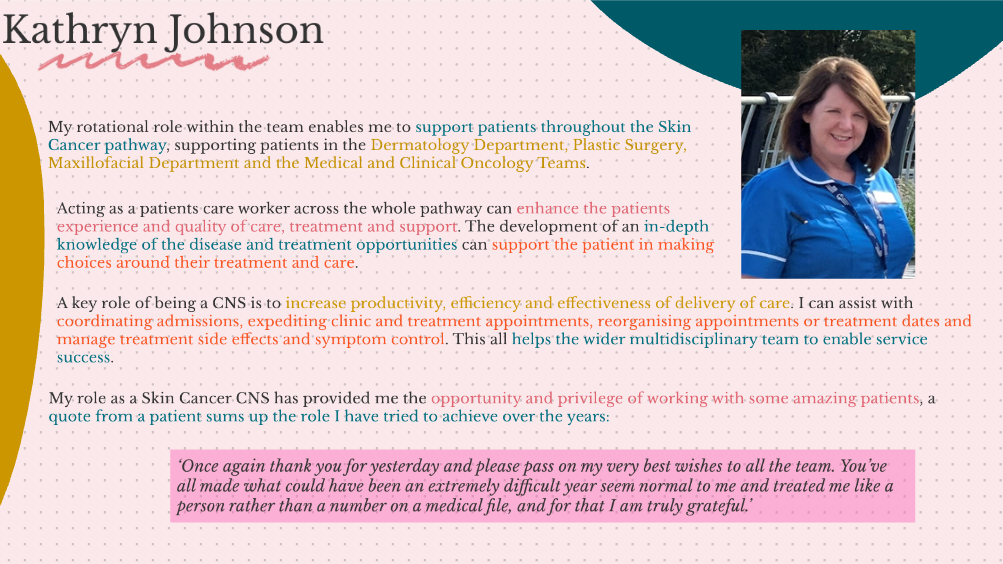
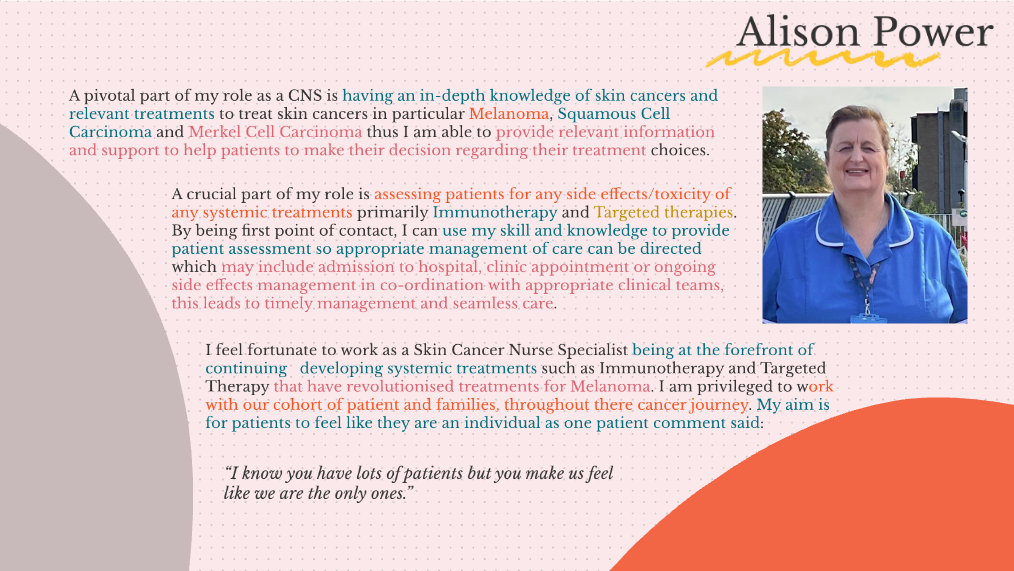
Here are some quotes from Cancer CNS staff across Wessex:
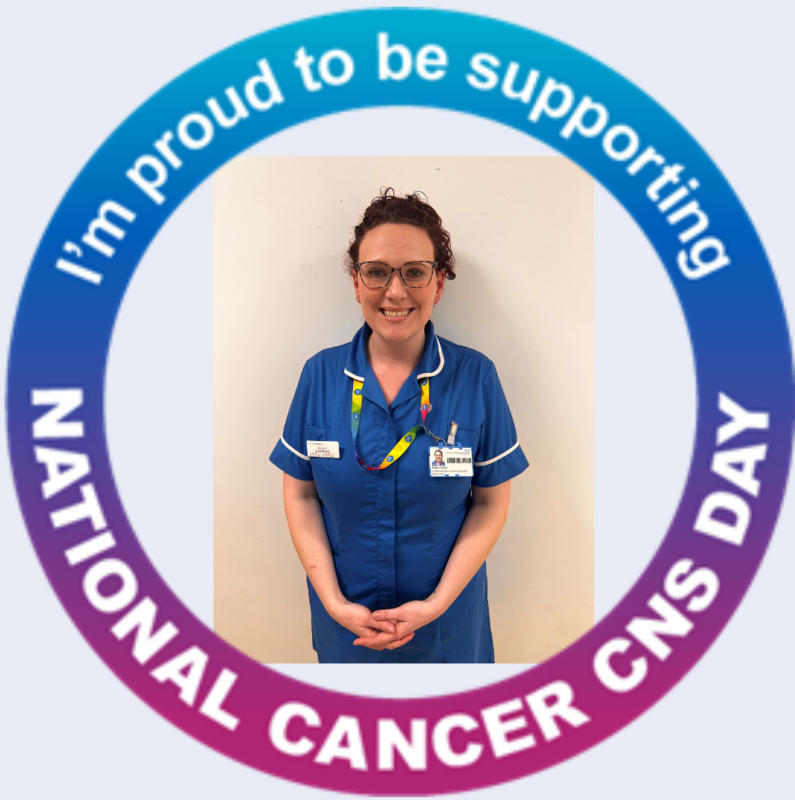
Robyn Tomat Lymphoma CNS: “Being a lymphoma clinical nurse specialist (CNS) is a deeply rewarding and impactful role, combining expertise in nursing with specialised knowledge of lymphoma. You become an integral part of patients’ lives during a challenging time. Helping people navigate their diagnosis, treatments, and recovery can create meaningful and lasting bonds. The difference you make in someone’s life is often profound. Many lymphoma patients face uncertain futures, so having a knowledgeable, compassionate nurse who can guide them through their journey can be immensely reassuring. Advances in lymphoma treatment have led to better outcomes, and as a CNS, you get to witness first hand how treatments help patients recover and regain their quality of life. Working closely with patients allows you to advocate for their needs, whether that’s ensuring access to the latest treatments, helping them get financial support, or offering guidance on managing side effects. You become an essential voice in improving patient care and outcomes. In summary, being a lymphoma CNS is incredibly rewarding because you get to play a vital role in helping people during one of the most difficult times in their lives. The balance of clinical expertise, patient care, and emotional support makes it a career that is both intellectually stimulating and personally fulfilling.
A patient recently said to me, I feel like I’m sitting on a ledge alone. I told her I would come and sit with her. This is ultimately what being a CNS is about. Being there however and whenever they need you.”
“The ACCEND pathway is helping us as CNS’s to demonstrate our clinical competency as well emphasise our clinical excellence through continuous improvement in patient care delivery. ACCEND is empowering us to be effective clinical leaders and supports our professional growth. Through this we are able to transform practice. Ultimately this all impacts on us being able to improve patient care.”
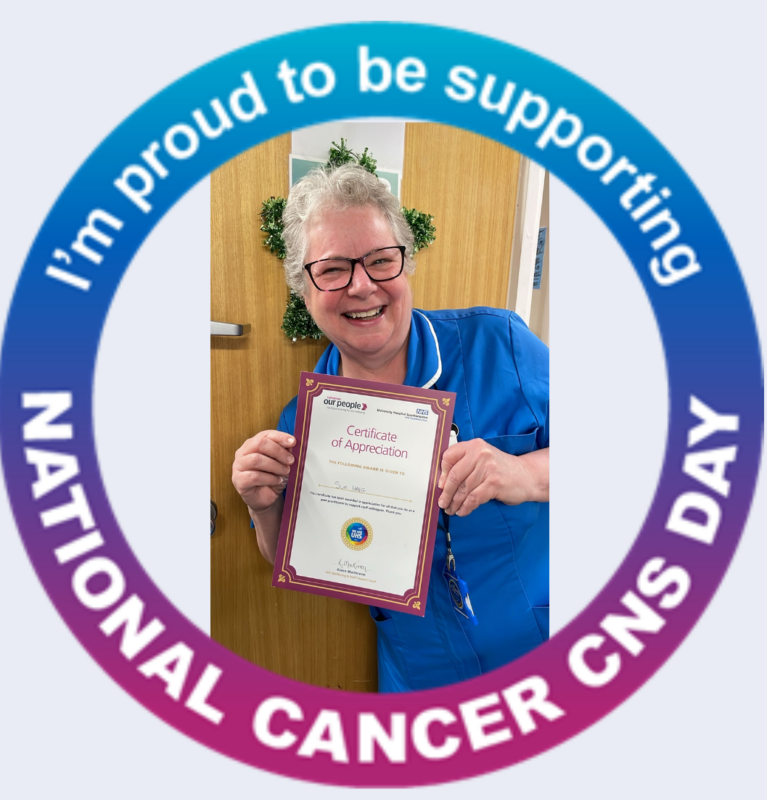
Sue Haig Support and Palliative Care CNS: I have been working with the Supportive & Palliative Care team for 24 years and I can honestly say it is the best job I have ever had. When I joined the team, there was 1 consultant, a training SpR and 3 WTE CNS’s and at that time we saw about 800 new referrals a year.
We had all done our advanced communications courses, various ENB (if you remember them) courses – care of the dying, teaching and assessing, cancer care etc. I was fortunate to complete my Masters in psycho-social palliative care during those early years. I didn’t imagine that 23 years later I would be doing other courses which would enable me to examine, diagnose and prescribe various medications for patients in a timely fashion.
Move forward 10 or so years and we moved to providing a 7 day service, with 1 CNS on site and a consultant on call. This worked for a few years and as the team expanded, we now have 2 CNSs on site at weekends and are kept very busy.
When I started out as a CNS it was very much focused on physical and psychosocial care mainly for cancer patients and I am pleased to say that those skills are offered to all patients with any potentially life limiting illness and wherever they are in the hospital. Non-cancer makes up approximately 1/3rd of our work. Most of the CNS’s have a specific area of interest – mine is working with teenagers and young adults, which produces its own challenges, but one I enjoy hugely.
Alongside the clinical work I, with the education lead for palliative & end of life care, run 4 study days a year for the palliative & end of life community of practice nurses. These are ward nurses who have an interest in palliative care, with them deciding the programme for each day. We are often asked to support teaching and provide regular informal teaching when seeing patients.
I love my job, and it is such a privilege to be in this role, to provide the support to patients, family, friends and staff which they need
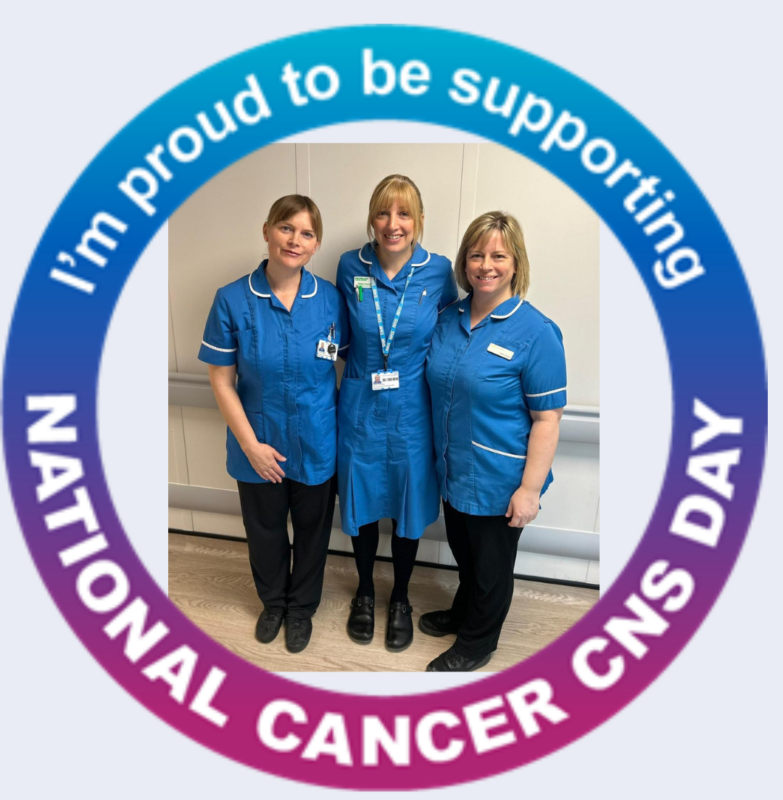
Louise Sharif, Sarcoma CNS: “Our team are passionate about providing excellent care for patients. It’s a privilege to support not only our patients but also their loved ones, providing a constant link and guiding them from diagnosis through treatment, surveillance, and beyond.”